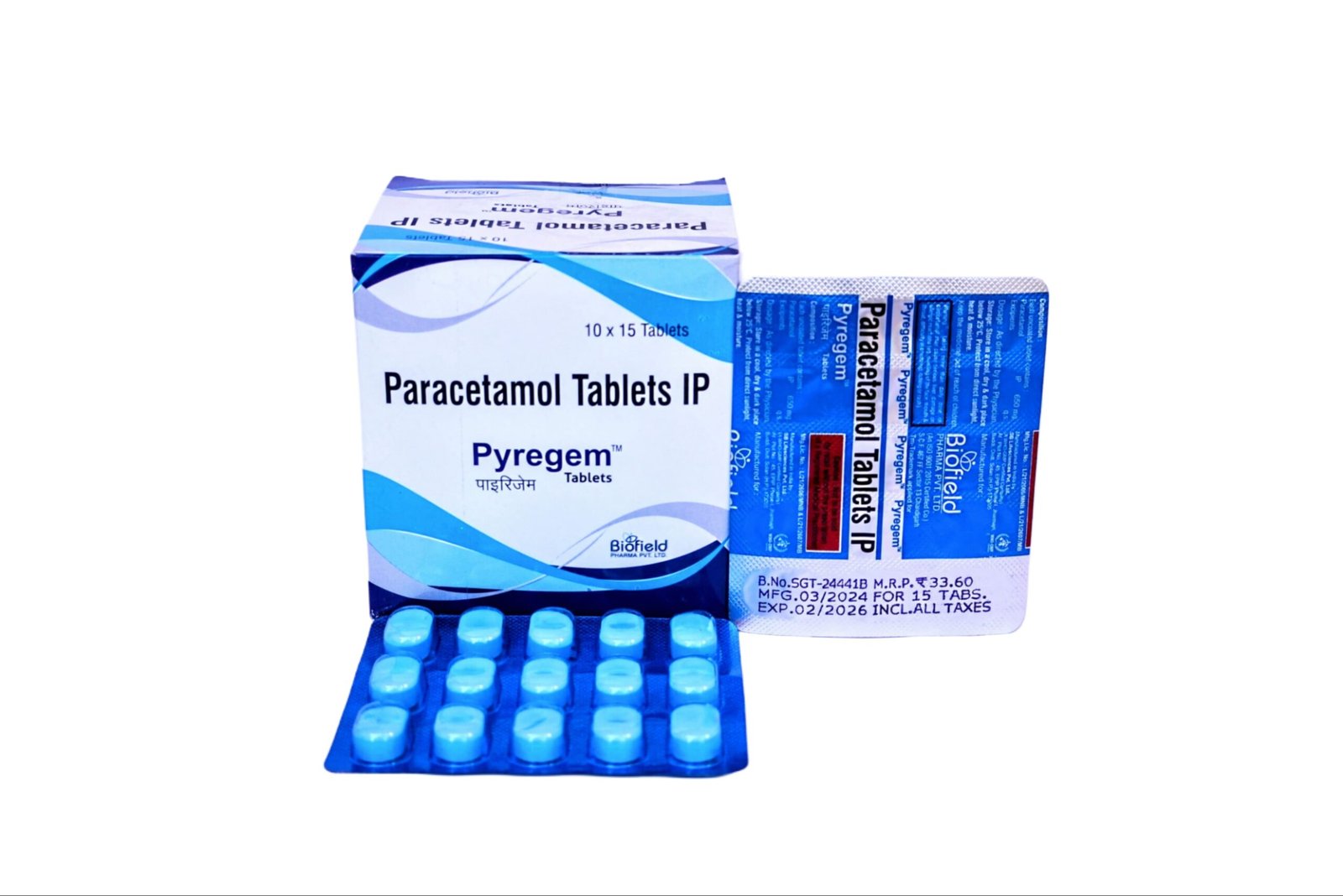
Paracetamol, also known as acetaminophen, is one of the most commonly used medicines worldwide for the relief of pain and fever. It is classified as an analgesic (pain reliever) and antipyretic (fever reducer). It is widely used in homes, hospitals, and clinics because of its effectiveness, safety profile, and suitability for people of all age groups, including infants, children, adults, and the elderly.
Paracetamol is mainly used to treat mild to moderate pain such as headache, migraine, toothache, back pain, muscle aches, joint pain, menstrual pain, pain after dental procedures or surgery, and discomfort associated with colds and flu. It is also very effective in reducing fever caused by infections like viral fever, flu, or after vaccinations.
It works by blocking the production of certain chemical messengers (prostaglandins) in the brain that are responsible for pain and fever. Unlike many other painkillers, paracetamol does not cause irritation to the stomach lining and does not increase the risk of stomach ulcers or bleeding. This makes it a safer option for people who cannot tolerate medicines like ibuprofen or aspirin.
Paracetamol is available in many forms such as tablets, capsules, syrup, drops for children, suppositories, and intravenous injections in hospitals. The dosage depends on age, weight, and medical condition. It is very important not to exceed the recommended dose because high doses can seriously damage the liver and may lead to liver failure.
In general, paracetamol is well tolerated and has very few side effects when used correctly. However, people with liver disease, chronic alcohol use, or malnutrition should use it with caution and only under medical advice.
Overall, paracetamol is a trusted, effective, and affordable medicine for managing pain and fever safely when used responsibly.